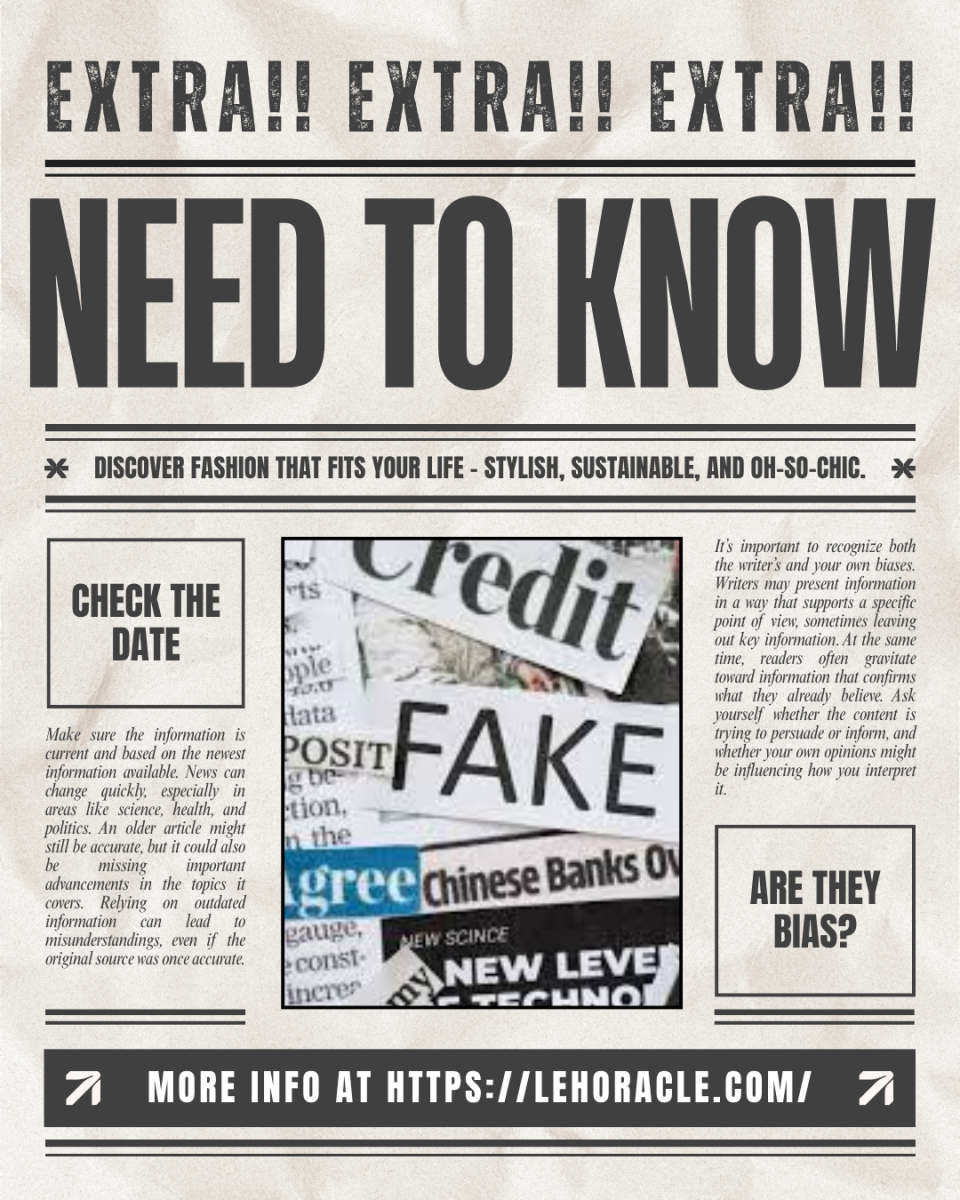
In our current day, news is always around us. It’s no longer a question of looking for it or not. For current students and teenagers, the source where people get their news has shifted. Teenagers no longer look to TV or news stations, instead it has been replaced by social media.
“I usually get my news from social media like Instagram and Google,” Kalai Larsen, a Junior in high school said.
And rather than actively searching for news, people are introduced to it on their feed and from there, they either decide to dive deeper into it or not.
“I’m not really looking for news unless I see something,” Larsen said. “Then I either go really deep in it or just find it a bit interesting.”
But this passive way of consuming information creates this situation where people rely on what appears in front of them instead of looking for trusted sources. With studies showing that more than half of teenagers go on Instagram or Snapchat everyday getting their news from nonverified sources according to The Pew Research Center. But this creates a problem when mixed with the impactfulness of news. News influences opinions and beliefs, with them being able to control what you see and how you see it. Which makes it easy to either strengthen or change beliefs of those that take things at face value.
That is why it’s important to get information from valued sources. News stations and professional journalists are expected to verify their statements, and interview tons of different sources. Allowing them to share information not to change people’s mind, but to inform.
“I have always looked at journalism as a community service,”Darsha Dodge, a Senior News Reporter from KOLN 10/11 News stated. “My first market station taught me to be a mirror of the community.”
The enormous amount of information that is available now creates this entirely new environment that’s never been seen before. With social media, algorithms are showing users content that follows with their likes and things they often watch. Which is making a place where the news and information you get isn’t necessarily true, but simply whatever makes you keep watching and listening, creating this sort of echo chamber.
Another problem is misinformation. The speed at which information can spread online makes it harder and harder to distinguish what is real and what isn’t. A study conducted by Stanford University found that 82% of middle school students couldn’t tell the difference between sponsored and nonsponsored news.
“Oh, definitely harder to know what’s real and what isn’t nowadays,” Larsen said. “You have to do a lot of research and find good sources to back it up.”
“Artificial information today makes distinguishing fake news from real harder, especially for photos,” Dodge said.
With how things are currently, information can be shared with almost no fact checking. Which is the complete opposite of journalism, which requires editing, fact checking and so many other hoops. Because of the power that online sharing has, there is a responsibility on those that choose to share information to be trustworthy and credible.
“I do feel like there’s a moral obligation when sharing information,” Larsen said. “It’s ok to state your opinion and ideas, but you have to share both sides.”
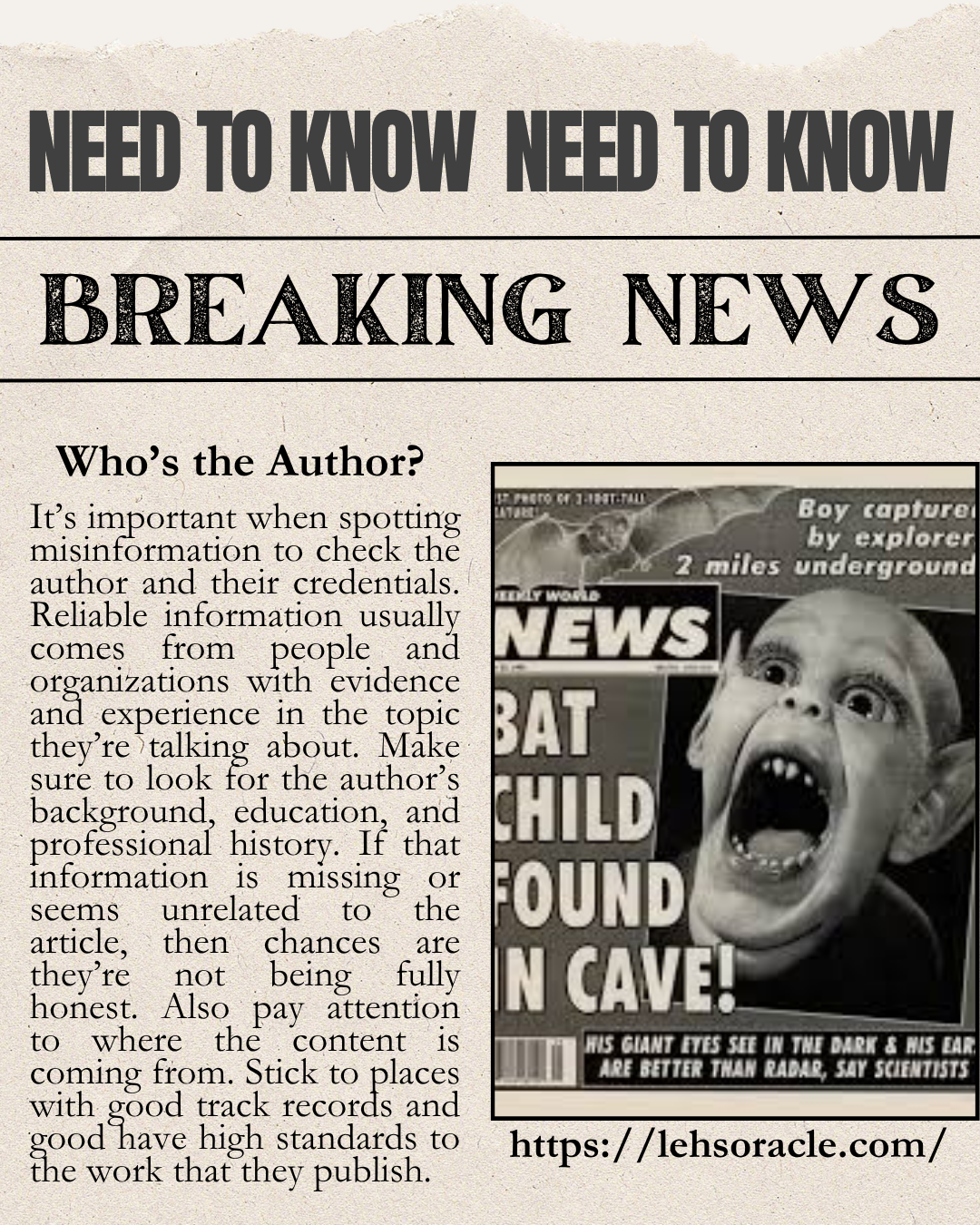
When wondering if something is misinformation it’s important to ask where that information came from. Ask who posted it, and why it was shared. If the headline seems super dramatic or designed to make you feel a certain emotion, that should raise some red flags.
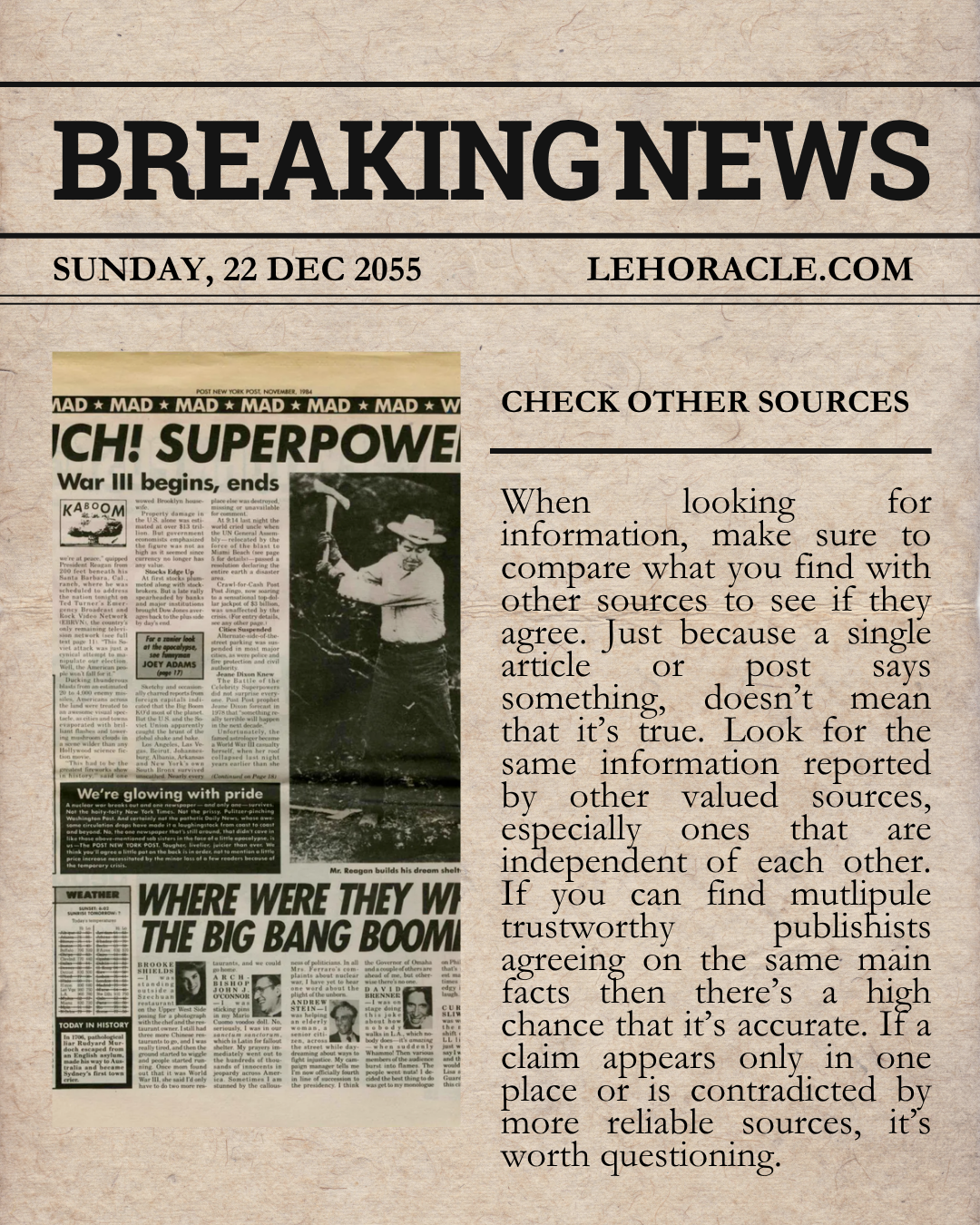
Another smart thing to do is check whether other trusted sources share the same story. If only one or even potentially a few posts are talking about something, there’s a good chance that it’s not true, or at least not giving all of the details.
“Everyone in general needs to learn to be skeptical and can’t believe everything they read, but also, can’t read only what they believe,” Dodge said when asked what habits she wishes more people had when reading news. “Regardless of your background, interests, or political persuasion, make sure you have a well rounded view of what is happening in the world.”
But even with the risks, we still have so much to gain from news. It allows people and communities to be informed about elections, severe weather, crime, school issues, and events that could affect everyday life. Most importantly, it gives people the information they need to make decisions, stay safe, and better understand the world around them.
News also connects us together. It brings attention to communities in need, and inspires those to act and support people in need. According to The Pew Research Center, 74% of teens say social media helps them feel more connected to their friends’. This shows that technology can be positive for building connections when accurate information is being told.
“You have access to more information faster than any generation before you,” Dodge said. “We have so much technology at our fingertips. You can hop on AP News, CBS, or Facebook and find any number of potential sources to corroborate.”
The worldwide availability of news has transformed how people watch and gather information. But it also has the potential to shape beliefs, influence decisions, and affect how society reacts to major events. So it’s important to make sure that the information is true and accurate.