Almost everyone has had a small talk conversation in their life. Whether that is catching up with someone they haven’t seen in a while, or just meeting someone for the first time, small talk seems to be a very big deal to how relationships start to form. However, social interactions have been slowly decreasing due to more availability of technology.
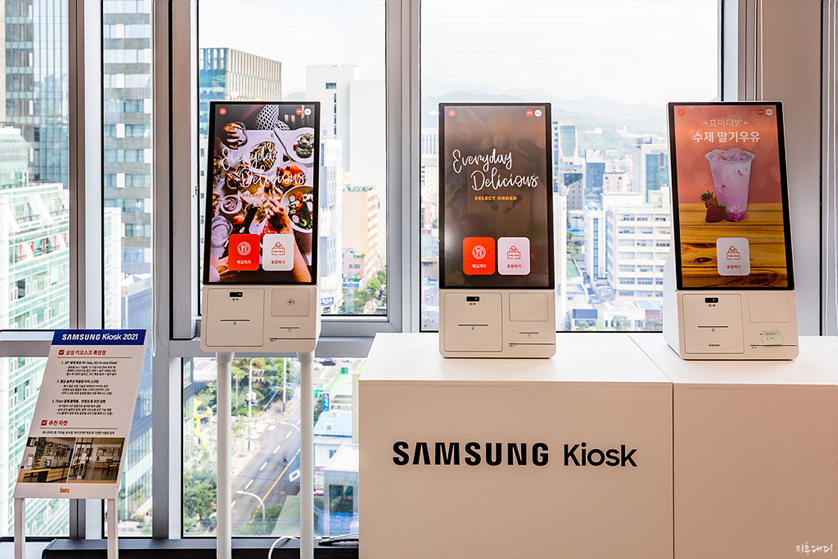
Almost everyone has been guilty of using self-checkouts or kiosks to order. But little do we know, kiosks and self-checkouts are decreasing human communication. This effect has been expanding for years. Ever since the first true self-checkout in 1986, put in the Kroger Supermart in Atlanta, Georgia, the reliance on technology has been increasing. We use it as a basic necessity that is available at local supermarkets and fast food chains that people view as a very efficient system.
Kiosks and self-checkouts are essentially a standalone interactive station that makes shopping and retail purchases more structured than before. Though their intent was for being dependent to purchase things on your own, people have taken it for granted.
People’s dependence on kiosks and self-checkouts has been damaging to social interactions as well as very harmful for employment opportunities. Newer generations have become accustomed to these technologies that some do not see a major difference in the amount of communication. But to older generations, they have seen these technologies be created and become used irresponsibly.
Lauren Brandt, a past Target employee, worked at Target for two and a half years when they did not use self checkout systems yet. Brandt has witnessed the environment of retail while people were still checking out with employees which helped with personal experiences when helping clients.
“A lot of people are wanting to do the self checkout, which I understand, because again, it’s sometimes you don’t want to talk to someone,” Brandt said. “But, sometimes it’s not always the quickest, sometimes regular checkout is just as quick or quicker.”
Brandt sees the changes in retail now with these self checkouts and kiosks, and she has seen the decrease in employment due to these systems taking peoples job opportunities.

“You don’t need as many people being hired because you are not having registers, you’re just using the self checkouts,” Brandt said.
However, someone may argue the opposite, stating that these kiosks and self checkouts can be very efficient and can help with personalization when placing orders. The increase in the use of these technologies have also been at a rate of improving accuracy.
The Kiosk Information System is a website addressing the increase of the industry of kiosks and self-service systems in manufacturing and efficiency.
“Self-service kiosks deliver exactly what your patrons request,” Kiosk Information System said. “Features like visual menus and barcode scanning further minimize errors while creating personalized interactions.”
Nonetheless the ability for these technologies to be more accessible and structured, is still harming environmental and social policies. Today, someone can go to the store and restaurant and automatically be able to purchase an item without even speaking a word to an employee. These changes are taking opportunities from many, the current employees trying to find ways to interact with clients and those currently unemployed trying to find a sustainable job.
We need to do a better job taking into account the harm these technologies have on the current state of our societies employment and social status. If people can find a compromise to using technology efficiently while not over using it for everything they do, there can be a serious increase in people’s ability to communicate and form relationships instead of depending on technology to do all the work for them.