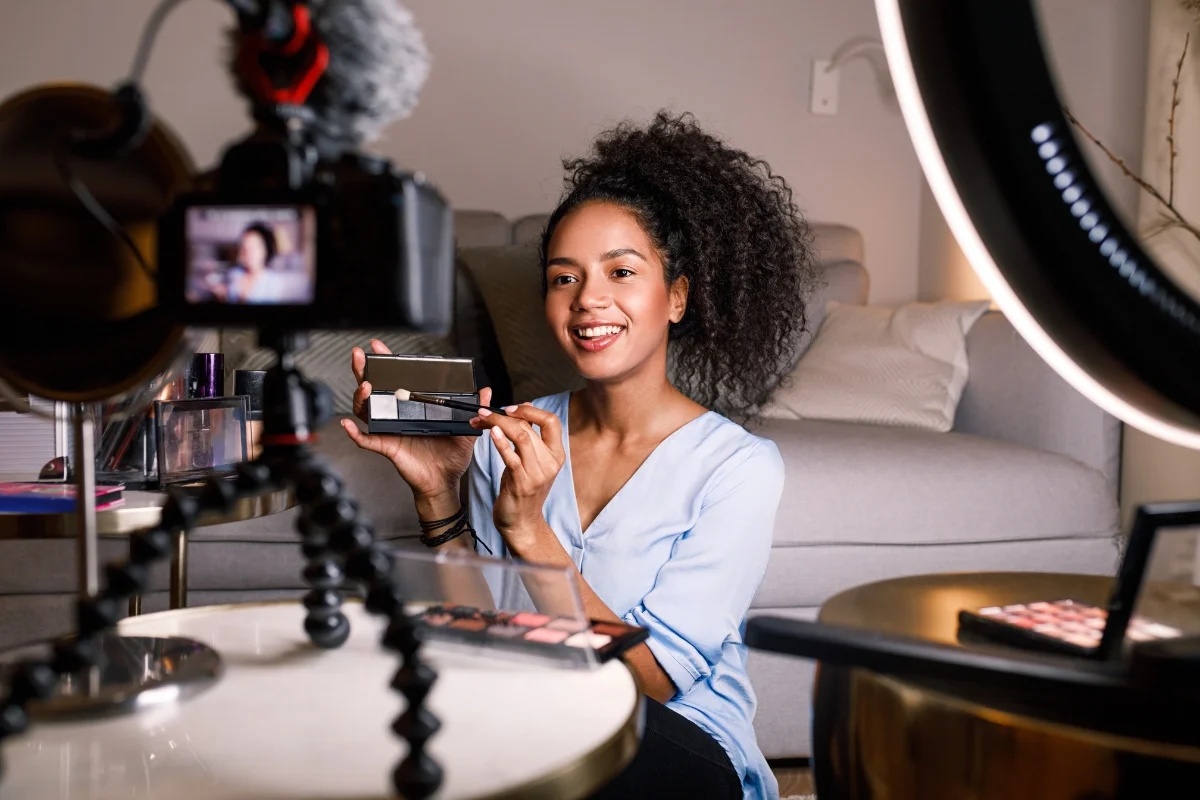
Social media and the influencer career has become a mainstream idea in the recent 2020’s. Posting online seems like an easy career in of itself; picking up a phone, recording a video, and posting it to go viral has never been easier. However, as the influencer career picks up traction, there are bound to be those that not only exploit their platform, but their own children.
Children’s existence on social media is not a new concept—moms will post a photo of their child, praising them for completing a second grade thumb pot that looks like a lopsided sphere—onto Facebook. That is the kind of content most people think of when they hear of children being posted online. Yet, there’s another type of this content: videos or photos that show children in compromising situations.
These situations are posted online for millions to potentially see. With this audience, there are many consequences that can come to fruition due to these posts going viral. One consequence is strangers being able to track a child. If the location of something prominent to the student is accidently shared, many can go and find said location, exposing the child’s safety.
A further explanation of this danger was written in an article titled ‘Sharing Isn’t Always Caring: The Risks and Dangers of ‘Sharenting”’ by Cleveland Clinic. A psychologist named Susan Albers directly discusses the topic of how parenting online can be so disruptive for a child’s everyday life.
“Let’s say you take a picture of your kid posing in front of their new school,” Dr. Albers said. “Now, suddenly, everybody with access to that image knows where they go to school and how to find them. Sharenting opens a window directly into a child’s life, which predators or those with ill intent can abuse.”

While the physical aspect of posting children online can be detrimental, other issues can also arise. If the video goes viral, anyone can leave a comment on the video–unless the comments are turned off on the post, which they normally aren’t. People can say horrible things about a child, whether it be about their looks, behavior, speech, or generally anything within the video. This can be detrimental to a child, as they could later on in life see these comments and feel the effect of such negative words years later.
One example of a child being posted for exploitation is that of Ameliya Rose. Her mother, named Ashley Vlaz, had been posting her online for years. Ameliya Rose is known online for having the traits of being a ‘spoiled’ or ‘bratty’ child that misbehaves constantly. Her mother pulls out the phone each time her eight year old daughter spends some of her money without permission or talks back. Most parents wouldn’t even think about pulling out the cellphone to record such a serious moment, but Ashley jumps at the opportunity to record her daughter arguing with her, as the content typically generates millions of views and income.
A TikTok of Ameliya spending around $600 on a beige Marc Jacobs tote bag went extremely viral, garnering a total of 43 million views and around 100,000 comments. The comments were ruthless, demeaning Ameliya for not only her actions, but her looks as well. As more comments were written, the video continued to blow up, creating more traction for the post to go viral.
Videos like these will forever be on the internet, they cannot be erased or deleted, no matter how hard one may try. Ameliya will grow up and be haunted by these videos her mother posted of her online. A video of that caliber could produce anywhere from $800 to $160,000+ depending on the program that Ameliya’s mother could’ve been in during the publishing of that post.
When one becomes a parent, finding that balance between sharing a child online can be difficult. But Mrs. Daly, mother and family consumer sciences teacher, has been able to find that proper balance between safe and exploitative.
“I don’t have a very strong social media presence,” Daly said. “I have never thought it was funny to post embarrassing pictures of my kids or videos of them crying, etc. We have also had a lot of conversations about their own posts, but at the end of the day, they are kids and sometimes have to learn on their own, just hopefully not the hard way.”
With the overwhelming growth of social media usage, parents and influencers alike have to understand the balance between safely posting their children online versus actively exploiting them for views or money. Some ways to do this are simple: blurring a child’s face, not sharing their full name, or straightforwardly just not posting them at all.
Waiting until a child is fully able to make decisions on their own can take a long time; though, in the long run, it will be extremely beneficial to their development as they can decide for themselves on whether or not they wish to be viewed online by strangers. Not only will a parent save their child from future embarrassment and shame, but their child will be extremely grateful that they were saved from the ridicule that so many other children are subject to.